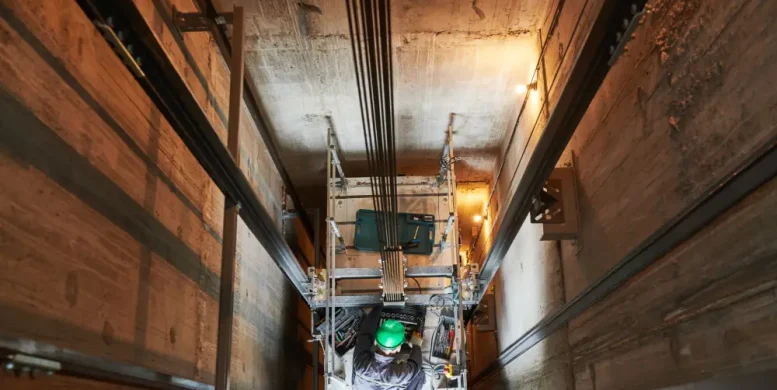
In the past, elevator maintenance was a time-consuming and labor-intensive process. However, with the advent of new technologies, elevator maintenance has undergone a major transformation. These advancements have made elevator maintenance more efficient, has reduced costs and improved overall safety.
From Scheduled to Predictive Care:
The foundation of this change is the Internet of Things (IoT). Modern elevator systems incorporate arrays of sensors that track components like motors, doors, and cables. These sensors collect continuous data on vibration, temperature, and performance metrics, transmitting it to cloud-based platforms.
Analytics software then examines this data for patterns that indicate wear. Instead of following a calendar, technicians intervene when the data suggests a potential issue. This prevents many failures before they disrupt service, reducing downtime and extending the working life of critical parts.
Connecting to Remote Experts:
Remote monitoring technology strengthens this predictive model. Service providers can now observe elevator operations from central control centers. Specialists access real-time performance dashboards, allowing them to diagnose many faults from a distance.
For certain software-related problems, they can implement fixes without dispatching a technician. This capability accelerates response times for minor issues and ensures that field crews arrive on-site with a confirmed diagnosis and the necessary parts, making their visits more efficient.
Empowering Technicians with Digital Tools:
Technology also directly aids service personnel in the field. Augmented reality (AR) applications on tablets or smart glasses can overlay repair instructions or wiring diagrams onto physical equipment, guiding complex procedures.
Digital work orders replace paper, integrating seamlessly with parts inventories and historical repair logs. These comprehensive digital records provide technicians with full equipment history at their fingertips, enabling better-informed decisions during every service call.
Creating Transparent Service Relationships:
For building owners and managers, these innovations bring new clarity. Data-driven reports offer objective evidence of system health and the value of service work. Maintenance agreements can evolve from fixed schedules to dynamic plans based on actual equipment condition. This model helps control long-term costs and improves elevator availability, fostering a partnership focused on sustained performance rather than reactive repairs.
By making elevators communicative and service data-driven, modern technology is setting a new standard for reliability. The focus solidly moves from reacting to breakdowns to ensuring consistent, uninterrupted operation, reshaping expectations for building mobility.